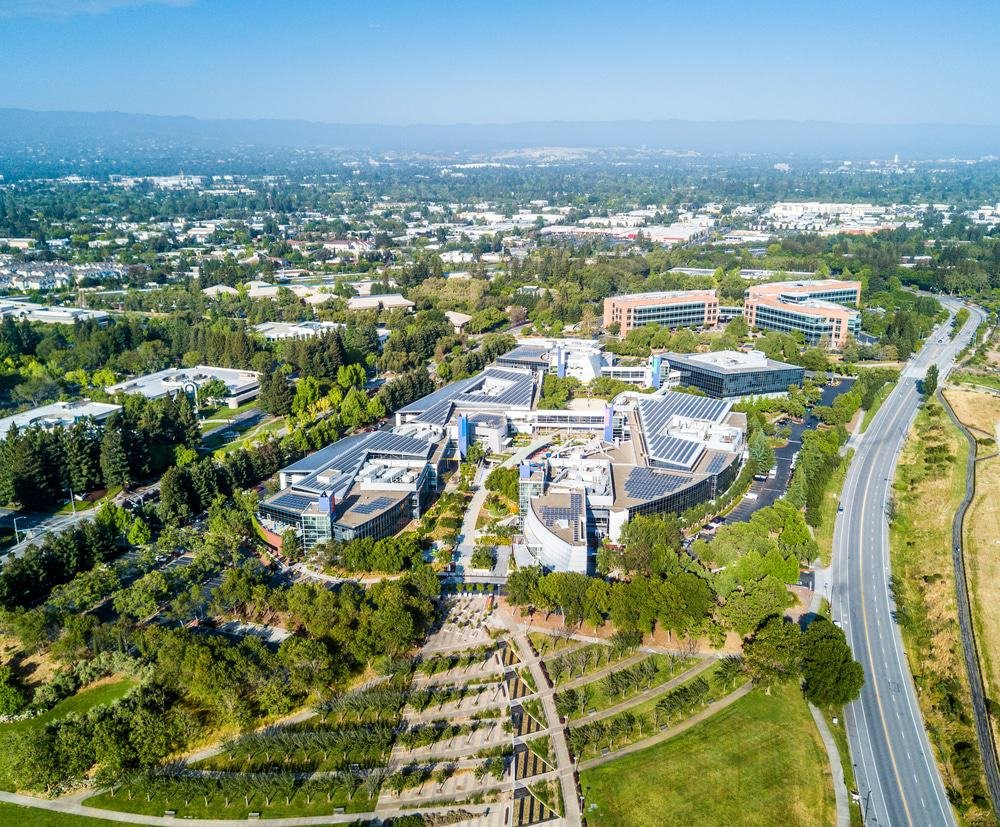
Buyers tend to treat Mountain View as the value alternative to Palo Alto and Los Altos — same commute, same employers, smaller number. That is roughly true, and it is also where the analysis usually stops. It shouldn't. Mountain View contains more genuine variation than either of its neighbors: a walkable downtown, mid-century tracts, ranch neighborhoods that feed into Los Altos schools, an industrial-turned-office corridor, and a bayfront district that is being rebuilt from the ground up. Two addresses a mile apart can sit in different school districts, under different zoning regimes, and next to entirely different development futures.
Here is how I walk clients through the geography before we tour anything.
The south side: schools, lots, and the quiet premium
Waverly Park and Blossom Valley, in the city's southern corner near the Los Altos line, are the most consistently expensive single-family neighborhoods in Mountain View. Larger lots, wide streets, mature landscaping, and — critically — portions that fall inside the Los Altos School District rather than Mountain View Whisman. That district line is the single largest driver of price variance inside the city limits, and it does not follow any boundary a buyer would guess from a map. Verify the assignment for the specific parcel with the district before you write an offer; never take it from a listing remark.
Cuesta Park, wrapped around the park itself, is the other mature-lot neighborhood on this side — postwar ranch homes, strong street character, and a buyer pool that overlaps heavily with Los Altos shoppers who priced themselves out. Gemello and Varsity Park sit nearby on smaller parcels with more vintage variety.
The center: downtown, Eichlers, and walkability
Old Mountain View, the grid surrounding Castro Street, is the walkability trade. You give up lot size and get a real downtown — restaurants, the Caltrain station, the farmers' market — plus a housing stock that runs from restored bungalows to newer townhomes and condos. It is the part of the city that most resembles a small town rather than a suburb, and it prices accordingly on a per-square-foot basis even when total prices look modest.
Monta Loma is the enthusiast's neighborhood: one of the larger concentrations of mid-century tract homes on the Peninsula, with a well-known Eichler component. Buyers come for the architecture and should understand what that means practically — post-and-beam construction, radiant slab heating, single-pane glass in unrenovated examples, and a neighborhood culture that cares a great deal about what you do to the front elevation. Renovation here is rewarded when it is sympathetic and penalized when it isn't.
Rex Manor, Sylvan Park, Martens-Carmelita, and Slater fill in the middle of the city with solid ranch stock at the most accessible single-family prices in Mountain View. This is where first-time Peninsula buyers most often land, and where the condition spread matters most — an updated home and a deferred-maintenance home on the same street can be separated by a wide margin, because the buyer pool for a project is far shallower than the pool for a house that needs nothing.
The layer most buyers never look at: which plan governs your block
Mountain View regulates development through standard zoning districts and four Precise Plans — El Camino Real, San Antonio, North Bayshore, and East Whisman — each with its own development rules that supersede the base zoning. Two of those, North Bayshore and East Whisman, are the subject of a long-standing City Council commitment to adding thousands of homes. If you are buying near El Camino, near the San Antonio center, or anywhere east of Whisman Road, you are buying next to a plan area with a published future, and you can read that future yourself before you commit.
Inside the residential neighborhoods, most single-family homes sit in R1, with some in R2 (one- and two-family) and R3 (multiple-family). The R3 district has been undergoing a formal update, and the city has been evaluating whether to increase allowable density on additional sites — which is to say the rulebook governing what can be built beside a given house is actively in motion. For a buyer, this cuts both ways: it is a risk to the view from your kitchen window and an opportunity if your own parcel is the one being upzoned. Either way, know which district your lot is in and which one your neighbor's is.
If you're buying income property here, the date is 1995
Mountain View has its own rent stabilization ordinance, the Community Stabilization and Fair Rent Act. The broad structure: multi-family properties with three or more units built before February 1, 1995 are generally fully covered — rent stabilization plus just-cause eviction protections. Multi-family buildings completed between 1995 and 2017 are generally subject to the eviction protections but not the rent cap. Single-family homes and condominiums are exempt from the local rent cap under state law. If you are underwriting a duplex, triplex, or small apartment building in this city, the year of construction is not a detail — it is the pro forma. Confirm the unit's status with the city's Rent Stabilization Division before you commit to a number.
What I actually tell buyers
Three things. First, confirm the school assignment at the parcel level, in writing, from the district — in this city that is not a formality. Second, pull the zoning district and check whether the property falls inside a Precise Plan area before you fall in love with it; five minutes on the city's planning pages tells you what the next decade on that block is likely to look like. Third, price the condition honestly. Mountain View's advantage over its neighbors is largely an advantage in mid-century housing stock, and mid-century housing stock has a bill attached. Know whether you are buying the bill or paying someone else to have already paid it.
Done properly, Mountain View is the most interesting buy on this stretch of the Peninsula. Done from the citywide median, it is a coin flip.
Looking at Mountain View?
I can tell you what a specific street, school assignment, zoning district, or plan area actually does to your number — before you write.
Start a ConversationSources & Further Reading
City of Mountain View — Zoning & Precise Plans →City of Mountain View — R3 Multifamily Zoning Update →Mountain View Whisman School District — Locate Your School / Residency →City of Mountain View — Rent Stabilization Division (CSFRA) →Payne Sharpley is a Silicon Valley real estate agent with Intero | Forbes Global Properties and co-founder of Citis, a housing-entitlement intelligence platform. CA DRE #02195155. This article is general information, not legal, tax, or land-use advice; zoning districts, Precise Plan boundaries, school attendance assignments, and rent stabilization coverage change and are parcel-specific — verify all specifics with the City of Mountain View, the applicable school district, and your own counsel before relying on them. Equal Housing Opportunity.