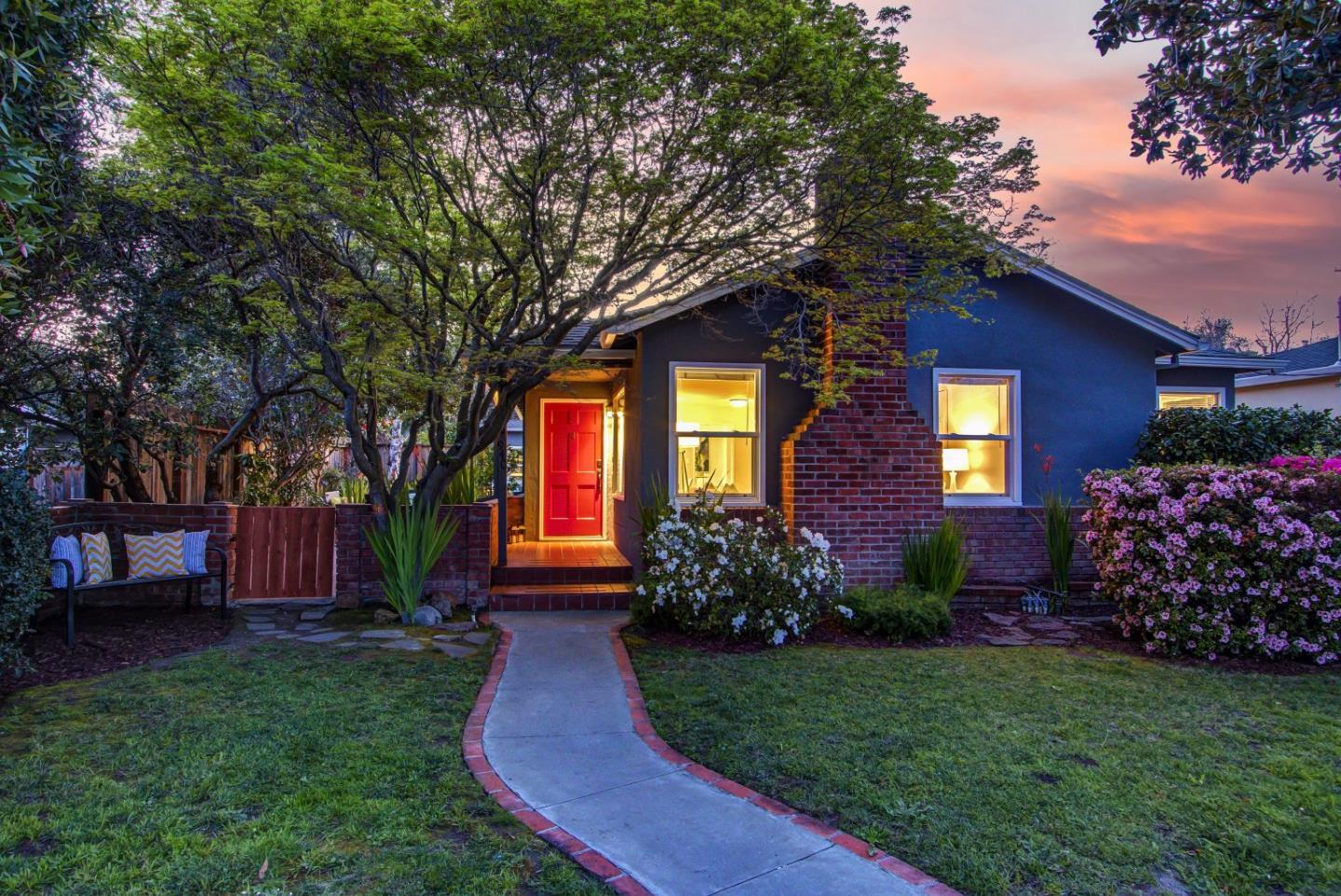
The mechanism is the Mills Act, a California program on the books since 1972. It lets cities sign contracts with the owners of designated historic properties: the owner commits to maintaining and preserving the home's historic character, and in exchange the county assesses the property on its income potential rather than its market value. In practice, for most owner-occupied historic homes, that cuts the property tax bill roughly in half — and for long-held or recently purchased homes alike, the savings compound every year the contract runs.
Run the arithmetic on a representative number. A home worth $2.85 million pays somewhere around $35,000 a year in property taxes under a conventional assessment. Under a Mills Act assessment, the same home's bill can land near half that. Owners routinely leave five figures a year on the table simply because they never applied.
The part that changes the value conversation: it transfers
Tax abatements usually die at the closing table. A Mills Act contract generally does not — it runs with the property, which means the buyer of a Mills Act home inherits the reduced assessment basis. Think about what that means in a negotiation: every competing home a buyer tours comes with a full tax bill, and this one comes with a permanent operating discount that no new build, no remodel, and no other listing on the block can offer.
When I value historic homes, I treat an active Mills Act contract as a real pricing lever, not a piece of charm. A buyer weighing two comparable homes at the same price is not actually looking at the same cost of ownership — and the market, when the story is told properly, pays for that difference.
Where the half-tax houses live
San Jose's Hensley Historic District, the blocks just north of downtown, holds the largest surviving concentration of Victorian-era residences in the city — more than two hundred contributing buildings. Naglee Park, the conservation area east of San Jose State, carries the same era of housing stock in a leafier grid. Nobody is building more of either, which is the quiet second half of the investment case: the supply of homes that can ever qualify is fixed and shrinking.
The condition spread is the whole game
Here is what the sales data in the downtown historic core actually shows. Un-renovated character homes trade in the low $600s per square foot. Renovated ones — foundation addressed, plumbing and electrical brought to code, systems modernized — trade between roughly $780 and $950. That spread is the entire economics of historic ownership in one sentence: the work is expensive, and the market pays it back with interest, because the buyer pool for a character home that needs nothing is far deeper than the pool willing to take on a hundred-year-old project.
Stack the two effects and you get the rare double: a renovated historic home with an active Mills Act contract sells into the top of the renovated band and hands the buyer a halved tax bill. Automated valuation models miss both — they price the average old house, not the contract or the kitchen — which is why algorithm estimates on these homes routinely run hundreds of thousands of dollars light.
If you own an old home and are curious
Qualification runs through the city, not the county: a home generally needs to be a designated landmark or a contributing structure in a designated district, and the application goes through San Jose's historic preservation office (every city administers its own program, and a few cap participation). The contract carries real obligations — maintenance standards, periodic inspections in some cities, and restrictions on alterations that would compromise historic character — so it is a commitment, not free money. But for owners who love these homes and were maintaining them anyway, it is the closest thing to found money in California property tax law.
An afternoon with the preservation office, against five figures a year, indefinitely, transferable to your eventual buyer. Some afternoons pay better than others.
Own a historic home, or thinking about buying one?
I can tell you what the contract, the condition, and the district actually do to your number — whether you're holding, applying, or selling with the story told properly.
Start a ConversationSources & Further Reading
California Office of Historic Preservation — Mills Act Program →City of San José — Historic Resources & Districts →Redfin — 95112 Housing Market Data →Payne Sharpley is a Silicon Valley real estate agent with Intero | Forbes Global Properties. CA DRE #02195155. This article is general commentary, not legal or tax advice; Mills Act terms, eligibility, and assessed savings vary by city, contract, and property — verify specifics with the administering city and the Santa Clara County Assessor, and consult your CPA. Tax figures shown are illustrative. Equal Housing Opportunity.