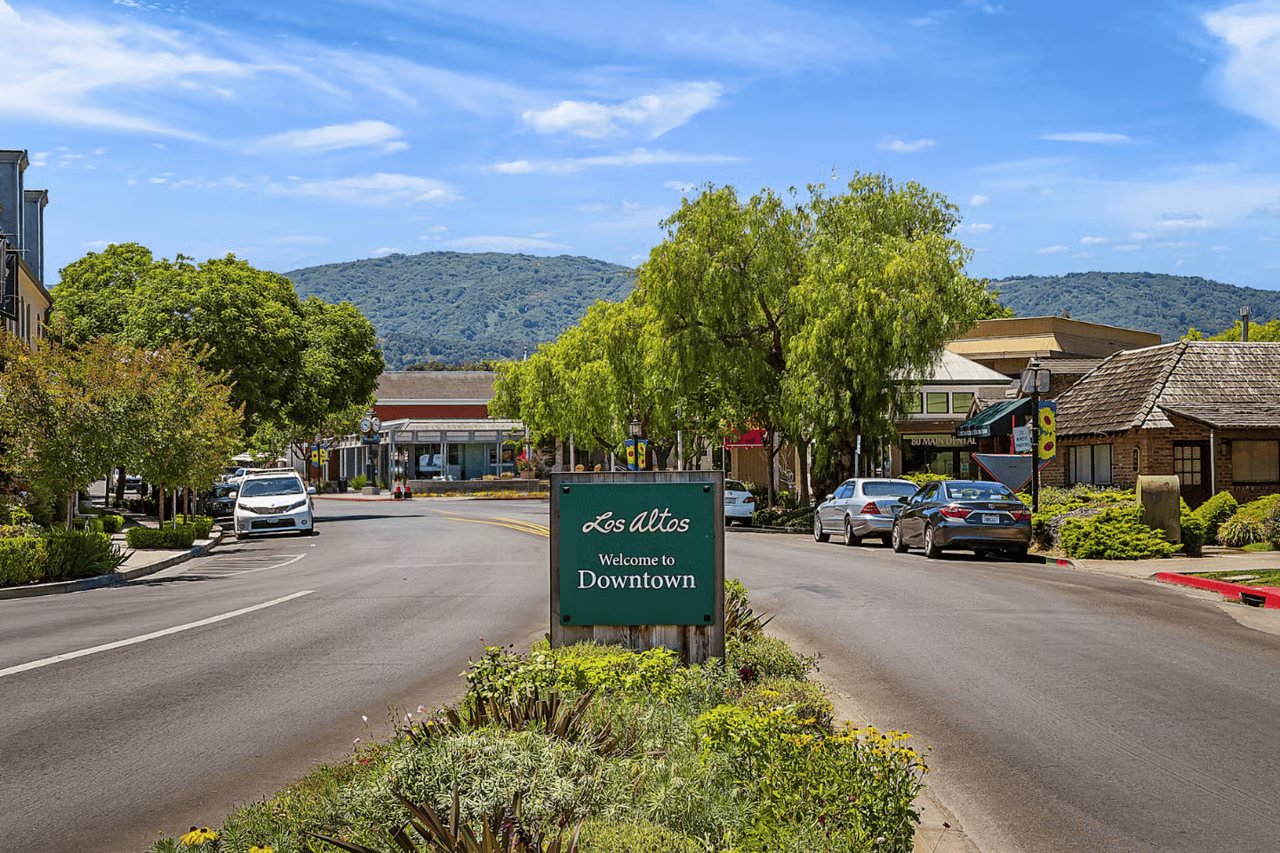
Buyers usually arrive at Los Altos by comparison. It is quieter than Palo Alto, flatter and more walkable than Los Altos Hills, and less formal than Atherton, with a downtown small enough to cross in five minutes. What the comparison misses is that Los Altos is not one market. The address on a listing tells you the city; the street tells you the school district, the lot pattern, the likely age of the housing stock, and what the city will let you build. This guide is about learning to read the street.
1. The shape of the city
Los Altos sits between Palo Alto and Mountain View to the north and Cupertino to the south, with Los Altos Hills on its western flank. Foothill Expressway cuts diagonally through the middle and, informally, divides the city in two. Almost everything is zoned single-family, the dominant district is R1-10 (a 10,000-square-foot minimum lot), and commercial activity is confined to a few small nodes: the downtown Village, Loyola Corners, Rancho, and the El Camino corridor. That restraint is the product Los Altos sells. It is also why lot size, not house size, drives value here.
2. The micro-markets, north to south
- North Los Altos. The blocks between downtown and the Palo Alto border, roughly bounded by San Antonio Road and El Monte Avenue. Proximity to the Village, the Los Altos School District, and easy access to Palo Alto and Stanford make this the most consistently sought-after part of the city. Lots are generous, streets are wide, and a large share of the housing stock has already been rebuilt, so buyers are often choosing between a new custom home and a mid-century ranch on a comparable lot.
- Old Los Altos. The original 1900s-era subdivision around downtown, with the city's oldest homes, some of its most irregular lots, and the only place in Los Altos where "historic" is a live consideration in a remodel. Walkability to the Village is the draw; lot shape and existing-structure constraints are the homework.
- Country Club and the western streets. Along the Los Altos Hills border near the golf and country club, lots grow larger and the terrain begins to roll. This is where Los Altos starts to feel like the Hills without the Hills' septic, slope, and pathway rules. Views appear on some streets; so do easements and drainage questions.
- Loyola Corners and Rancho. The middle of the city, south of Foothill Expressway, anchored by two small neighborhood shopping nodes. Solid, family-oriented streets with a steady rebuild cycle. Buyers here trade a few minutes' distance from downtown for slightly more house per dollar, and this is often where the best value in Los Altos sits for someone who intends to build.
- Woodland Acres and South Los Altos. The southern third, running toward Cupertino and Sunnyvale. Lots here are more varied, and this is where the school-district map gets complicated (see below). Pricing is generally more accessible than the north, but you have to read the boundary lines street by street.
3. School boundaries: the line buyers most often get wrong
Los Altos is served primarily by the Los Altos School District for elementary and middle grades and the Mountain View–Los Altos Union High School District for high school. But the city limits and the district limits do not match. Portions of Los Altos fall inside the Cupertino Union School District and the Fremont Union High School District, and a small area near the Palo Alto border is served by Palo Alto Unified. Two homes on the same street can be assigned to different districts, and because school assignment is a major driver of demand on the Peninsula, that line is often the single biggest variable in price between otherwise similar houses.
Do not rely on a listing description for this. District boundaries are set by the county and the districts, not the city, and attendance areas within a district can change. Confirm the assigned schools for a specific parcel directly with the Santa Clara County Office of Education and the relevant district before you write an offer.
4. Zoning and design review: what your lot can become
Because Los Altos buyers so often intend to remodel or rebuild, the city's rulebook matters as much as the house. Three things to understand before you fall in love with a lot:
- R1-10 and its cousins. The 10,000-square-foot minimum is the baseline, but the city's general plan recognizes established clusters of smaller lots, and lot size sets the arithmetic for floor area, setbacks, and lot coverage. A 10,000-square-foot lot and a 14,000-square-foot lot in the same district are meaningfully different building envelopes.
- Design review for two-story homes and additions. New construction, additions, and exterior alterations in the single-family district go through the city's design review process, guided by its Residential Design Guidelines. Second-story projects draw the closest scrutiny, with attention to privacy, massing, and how the home reads from the street. This is not a formality; plan for it in your timeline and budget.
- Single-story overlays. Some Los Altos neighborhoods have adopted single-story overlay zones that limit new construction to one story. If a lot sits in one, the second floor you were picturing is not available, regardless of what the neighbors two streets over have built. Check the zoning map for the specific parcel.
Setbacks, height limits, accessory-structure rules, and overlay boundaries all change over time. Verify current requirements with the City of Los Altos Community Development Department before you underwrite a rebuild.
5. What the housing stock tells you
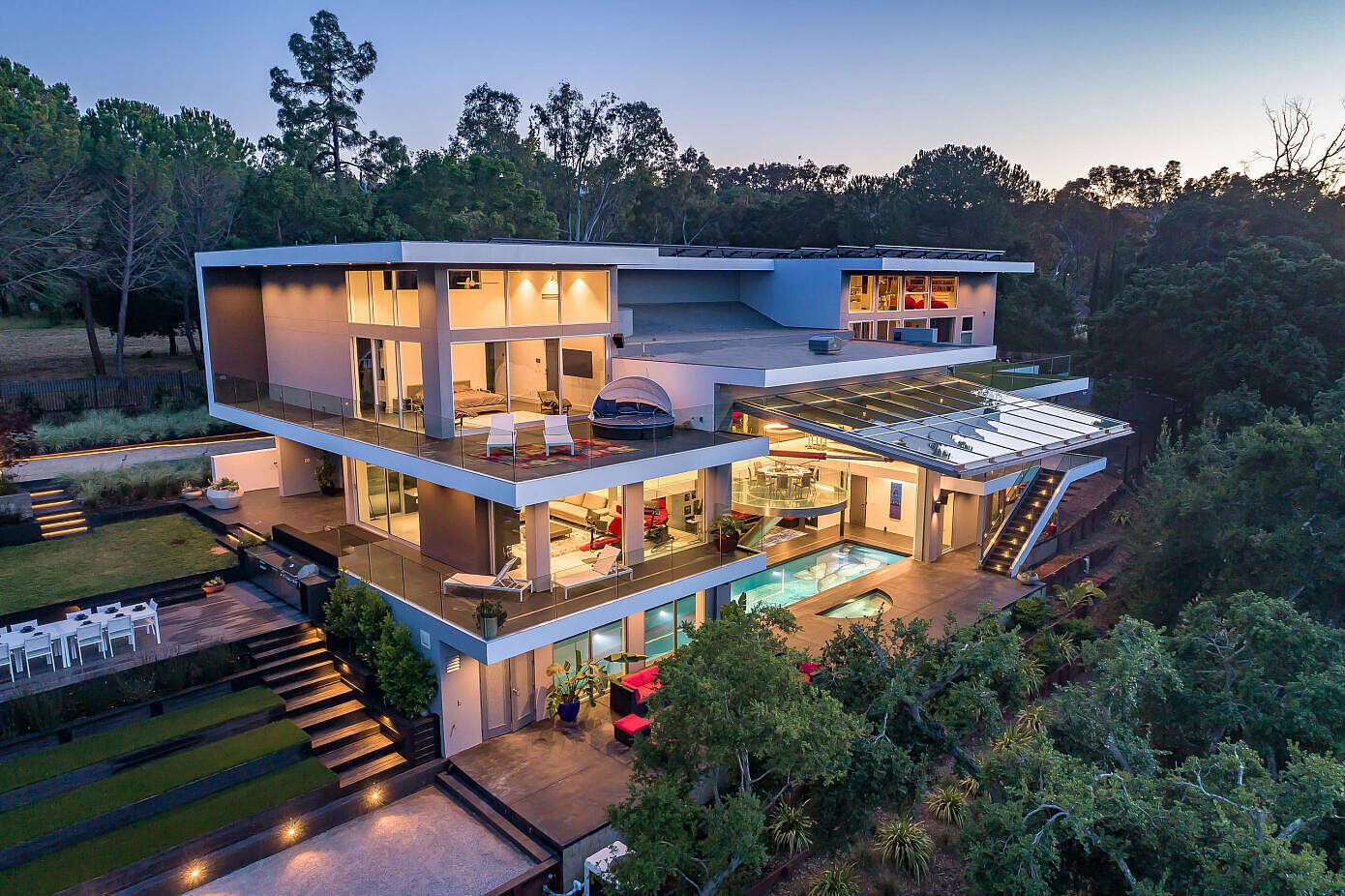
Los Altos was largely built out between the 1940s and 1970s as orchard land became ranch-house subdivisions. That leaves three kinds of product on the market at any given time: original mid-century homes that are effectively lot sales; substantially remodeled homes that carry a premium for condition but keep the original footprint and systems; and newer custom rebuilds at the top of the range. The mistake buyers make is comparing across categories. A remodeled 1962 ranch and a 2021 custom home on the same-sized lot are not competing products.
6. How to approach an offer
Start with the lot: size, shape, orientation, easements, and mature trees, which the city protects. Confirm the school assignment for that exact parcel. Pull the permit history, because unpermitted additions are common in housing this age and will surface at inspection. Then decide which category of product you are buying and price it against its true peers — before the listing goes live, not after the offer date is set.
Los Altos rewards buyers who understand that the value is in the ground and the rules, not the kitchen. The house you see is usually the least permanent thing on the lot.
Looking at Los Altos?
I'll read the lot, the district line, and the design-review path with you before you commit — with a developer's eye and an economist's numbers.
Start a ConversationSources & Further Reading
City of Los Altos — Single-Family Residential (R1) & Design Review →City of Los Altos — School Districts →Santa Clara County Office of Education — District Boundaries →Buying Land in Los Altos Hills →Palo Alto Neighborhood Guide →Payne Sharpley is a Silicon Valley real estate agent with Intero | Forbes Global Properties and co-founder of Citis, a housing-entitlement intelligence platform. CA DRE #02195155. This article is general information about residential property in Los Altos, California, not legal, tax, or investment advice; zoning, design-review, and school-boundary rules change, so confirm current requirements with the City of Los Altos, the relevant school districts, and the Santa Clara County Office of Education. Equal Housing Opportunity.